Cooling-system services
If your engine's temperature isn't rock-steady, it traces back to one of these seven systems. We diagnose symptom-first, so you know exactly what's failing before we quote a repair.
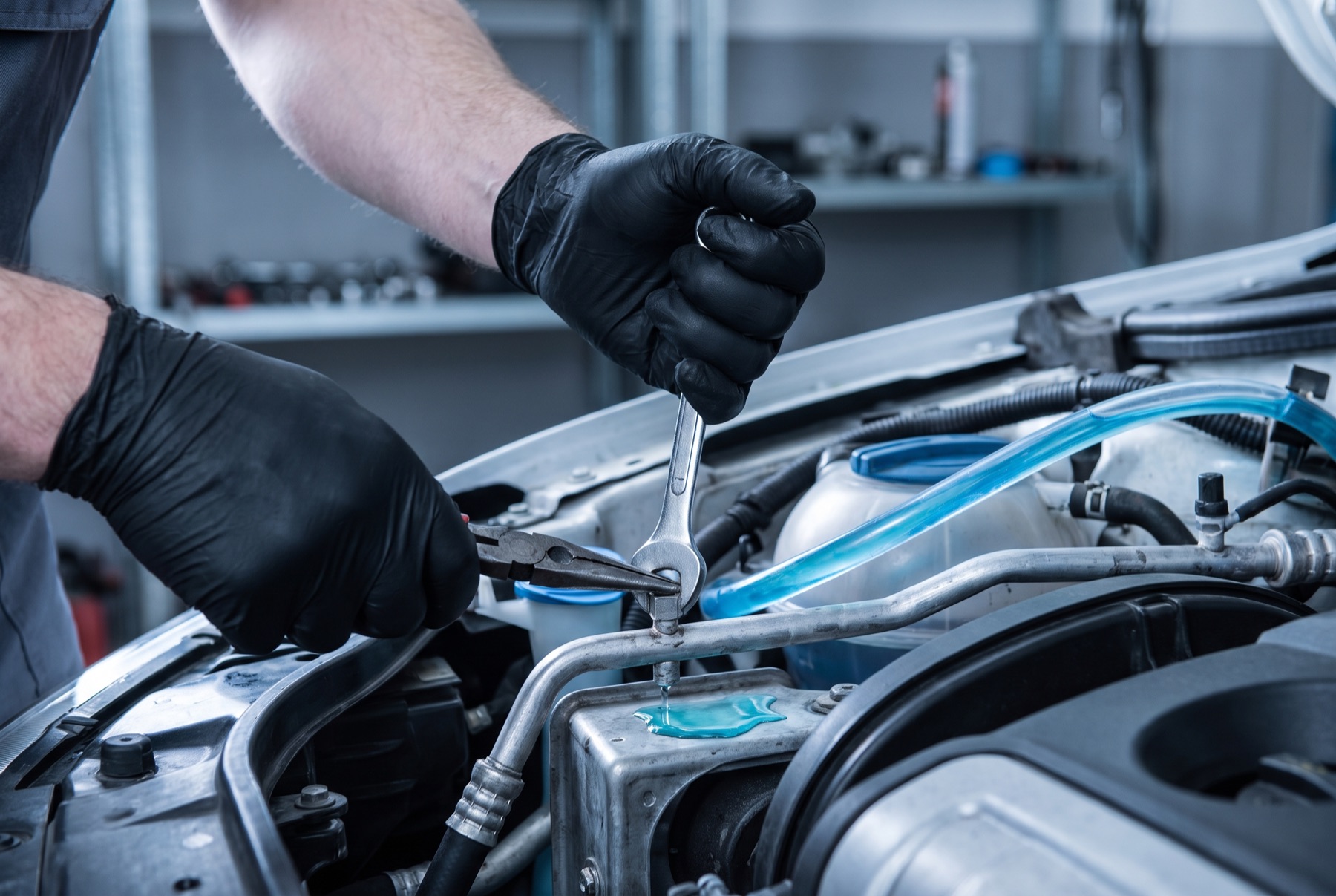
Radiator Repair & Replacement
Core leaks, split tanks, and corroded fins are the most common source of a slow coolant loss. We pressure-test to isolate the exact failure point — a pinhole in the core reads very differently from a cracked plastic end tank. Small core leaks can sometimes be repaired; cracked tanks and heavily corroded cores get a full replacement to OEM spec so fitment, flow rate, and cap pressure all match factory.
Water Pump Service
The water pump is the heart of the whole loop — a failed bearing or a worn shaft seal both start with noise, then progress to a coolant leak at the "weep hole" as the seal gives out. Left alone, a seized pump can also take the timing belt or chain with it. We inspect bearing play and seal condition, and replace with an OEM-spec pump, gasket, and — where applicable — the timing belt in the same service window, since labor overlaps.
Thermostat Replacement
A thermostat stuck open never lets the engine reach operating temperature — poor fuel economy, weak heat, and extra wear result. Stuck closed, it's a fast track to a full overheat with nowhere for coolant to flow. It's a small, inexpensive part, but it's the single most common root cause we find behind "random" temperature swings. We test the opening point against spec before it goes back in the housing.
Coolant Flush
Coolant's corrosion inhibitors break down over time, letting rust and scale build up inside the radiator, block, and heater core — which quietly chokes flow long before you'd notice an actual leak. A full flush clears the old fluid and any built-up debris, then refills with the correct coolant type and ratio for your vehicle. Mixing coolant types is a common DIY mistake that causes gel formation and blockages, so we verify spec before refilling.
Heater Core Repair
Your heater core is a miniature radiator tucked behind the dash, and it runs off the same coolant loop as the engine. A clogged core means no heat; a leaking one means a sweet smell and fogged windows inside the cabin — sometimes a wet passenger-side floor. Because it sits behind the dash, diagnosis matters more than usual here: we confirm it's actually the core (not a blend-door or valve issue) before recommending the more involved repair.
AC Condenser Service
The AC condenser sits right in front of your radiator and shares the same airflow path — road debris that dents or clogs one often affects the other, which is why we check both together. A damaged or leaking condenser can't reject heat from the refrigerant, so the system short-cycles trying to protect the compressor. We inspect fins, mounting, and refrigerant pressure before recommending a repair or replacement.
Diagnostic Leak Testing
Some of the trickiest leaks never hit the ground — a bad head gasket burns coolant internally, and a worn hose clamp can seep only under pressure while driving. We pressurize the whole system with a hand pump and gauge, watch for pressure drop, and use UV dye where needed to trace exactly where fluid is escaping. This is the diagnostic step behind almost every other service on this list — and it's included with every visit, not billed separately.
Tell us what you're seeing — we'll tell you why.
Describe the symptom on the request form and we'll flag the likely cause before you even come in.